Diagnosis Results
Differential Diagnosis with GIDEON
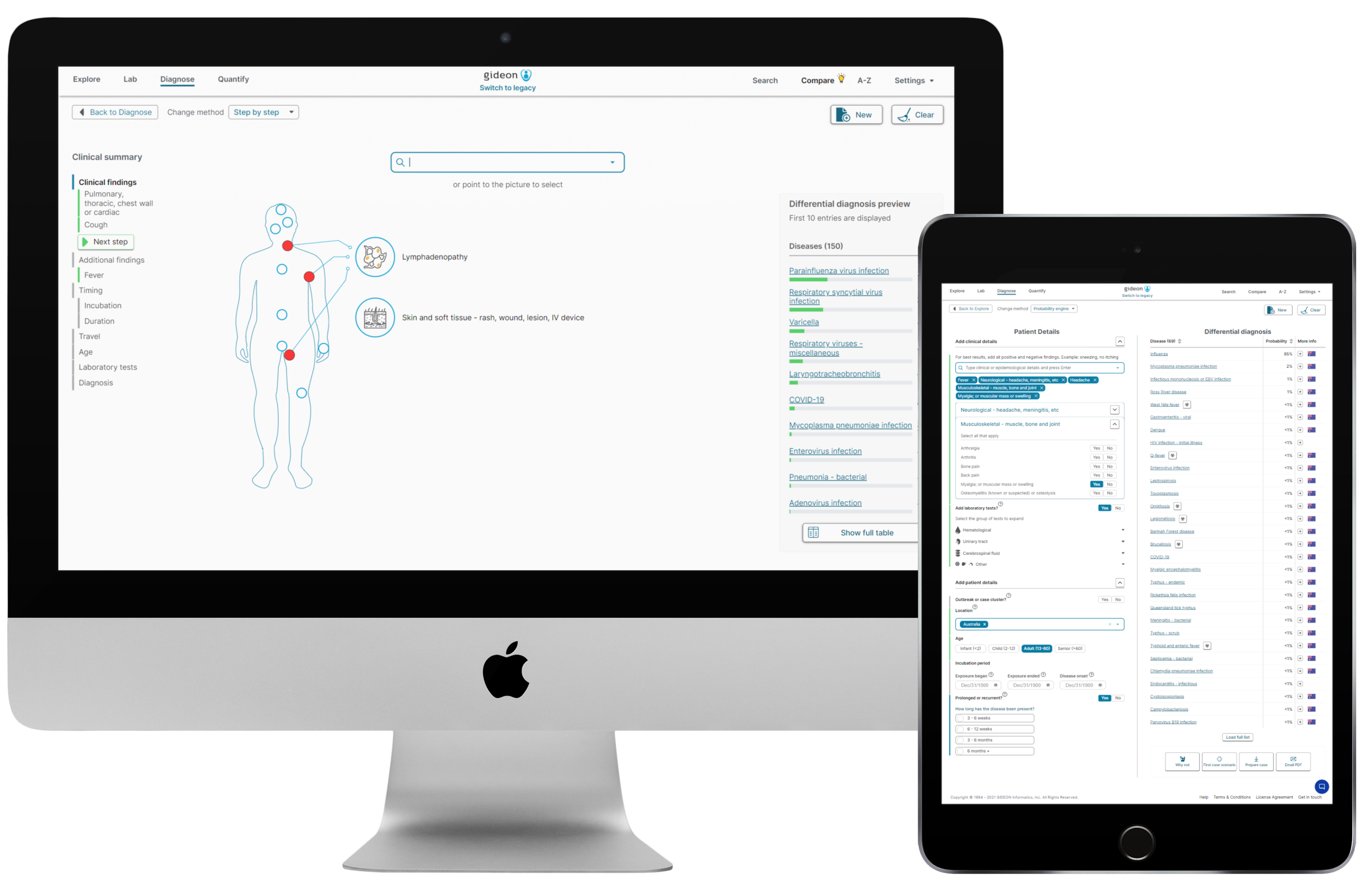
GIDEON’s Differential Diagnosis (DDx) toolkit provides two methods to diagnose a disease, both powered by a massive quantity of published medical research and geographical medicine data.
Diagnosis results are filtered based on the findings indicated by the user and shown in the Differential diagnosis table. This is the differential diagnosis of infectious diseases compatible with the clinical data entered by the user. Diseases are arranged in descending order of statistical likelihood, with probability figures indicated in each row.
Two methods to diagnose a disease
Medical doctors can make use of GIDEON’s Probability engine, a Bayesian analysis-driven clinical decision support tool that displays all the data in one place.
See it in action:
GIDEON also offers an interactive, Step-by-Step Diagnosis facility that is tailored to assist physicians in Point-of-Care settings. It is also an excellent teaching tool to help future medical doctors learn the process of diagnosing a disease.
Watch a video:
First Case Scenario
The First Case Scenario is a feature unique to GIDEON. It was developed in consultation with the World Health Organization and is designed to identify the initial cases of known diseases in new settings.
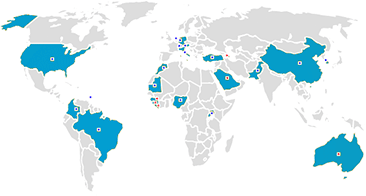
The list of diseases matching the signs and symptoms indicated by the user, but not endemic to the specified country, can be accessed via a dedicated button at the bottom of the differential diagnosis table.
Learn more:
Why Not
Occasionally the differential diagnosis list excludes a disease that you would have considered. Why not functionality explains why given diseases did not appear on the list of likely diagnoses.
Learn more:
Compare
Generate a side-by-side comparison table of up to 10 diseases at a time!
GIDEON makes it easy to compare diseases by their distinguishing clinical findings or fingerprint attributes. The list is optimized and ranked, with the most useful signs and symptoms at the top of the list. The comparison table can be sorted to suit the user’s needs, downloaded for future reference, and it also provides helpful notes about each disease at the bottom of the page.
Here’s how it works:
Notes
In some instances, “overlapping” diagnoses may appear. For example, both Enterovirus infection and Meningitis – Aseptic (viral) may appear among likely diagnoses for a patient with Lymphocytic Meningitis.
Diagnostic specificity is improved by entering as many positive and negative clinical findings as possible.