GIDEON blog

Free Demo ► Latest Updates ► Video Tutorials ►
Subscribe , j x

How to wear a face mask – PEOPLE shares Dr. Berger’s advice

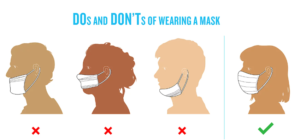
Illustration on how to wear a face mask correctly

Wearing a face mask is now a part of our everyday life. In early April, the CDC made the official recommendation that everyone should wear one to help slow the spread of COVID-19 after new research showed that 50% of people who get it don’t show symptoms. So they will likely be around for quite some time, but unfortunately, many people aren’t wearing them correctly and could be exposing themselves unnecessarily. 

Our founder, Dr. Stephen Berger, who is double board-certified in infectious disease and microbiology, provided important tips to People.

“A face mask should be as closely fitted to the skin as possible,” Dr. Berger told PEOPLE. He added there shouldn’t be any gaps on the side of the mask and it should cover everything from your nose to your chin. 

Dr. Berger said “The nose must be covered. Note that when people are tested for the virus, a swab is inserted into the nose — because that is where the virus is!”

Dr. Berger also provided tips for people who wear glasses and how they can avoid fogging up their lenses. 

You can read the entire article here. 

Find more of our latest content here

And don’t forget to follow us on Twitter, Facebook, and LinkedIn. We’ve got exciting updates on our new interface!

LA Times: Dr. Berger Answers Questions About Food and COVID-19

LA Times Cooking Editor, Genevieve Ko, turned to GIDEON founder, Dr. Stephen Berger, to get an expert opinion about COVID-19 and food transmission. Dr. Berger provided answers to some common questions people are asking such as:

  • Can COVID-19 be transmitted through food? If so, how?

Dr. Berger: There have been no cases of COVID-19 associated with the ingestion of food, but the question is well-founded. COVID-19 is, after all, caused by a virus that enters the body through the nose or mouth. Food items are, after all, objects which may be contaminated with the virus and placed in the mouth — but like many other viruses, bacteria, and parasites, these will be swallowed and most likely destroyed by stomach acids. Should the virus survive into the intestine, no pathway will carry it to the lungs.

  • Can COVID-19 be transmitted in the process of consuming food or only through the respiratory system?

Dr. Berger: The virus of COVID-19 must enter the respiratory system to produce disease. There is the possibility that material could travel from the mouth through the larynx and into the lungs. It is thought that acquisition of COVID-19 through this route rarely, if ever, occurs.

  • If COVID-19 is on food, can it be killed by cooking? If so, at what temperatures?

Dr. Berger: SARS virus, a close relative of the virus of COVID-19, is inactivated at temperatures of 56 to 65 degrees Celsius (132.8 to 149 degrees Fahrenheit).

  • Can you acquire COVID-19 from food?

Dr. Berger: The bottom line answer is … no.


You can read the entire article here. 

And don’t forget to follow us on Twitter, Facebook, and LinkedIn. We’ve got exciting updates on our new interface!

HealthDay talks to Dr. Berger about ‘best practices’ for disinfecting

If you are one of those people who think you need to scrub down everything after an outing, here’s some good news…you can save some of that disinfectant. GIDEON’s co-founder Dr. Stephen Berger provided practical advice about what items should be disinfected in your home. [Spoiler alert: It’s not your keys, money, or credit cards!] 

Here’s what Dr. Berger had to say to HealthDay: 

“We are all swimming through an invisible swamp of bacteria, viruses, fungi, and parasites. Those bookshelves and those pictures on the wall are teeming with ugly microbes. Not to mention your cellular phone, wristwatch, eyeglasses, and everything else in your world.”

But he did explain that there’s no need to scrub everything down once you return from outside. 

“The good news is that you are in no danger from most of this,” Dr. Berger said. “And you have no reason to compulsively avoid, or even clean, every object in your personal world. With one exception: your own hands!”

Proper handwashing is what the experts have been stressing from the beginning of the coronavirus pandemic and a message that Dr. Berger, who is double board-certified in infectious diseases and clinical microbiology, reinforces.

You can read the entire article here. 

And don’t forget to follow us on Twitter, Facebook, and LinkedIn. We’ve got exciting updates on our new interface!

What’s The Difference Between a Face Mask and a Condom?

Face masks can protect you from contracting COVID-19

Cloth surgical masks were first used in the late 19th century and were replaced by modern masks during the 1960s. Surgeons do not wear masks to protect themselves from the patient, but to protect the patient from their own oral and nasal bacteria. 

In any case, masks do protect the users themselves. A variety of masks are currently marketed in a wide range of designs, materials, filtering specifications, and prices. Both cloth and paper masks will offer protection against COVID-19…. but not one-hundred-percent protection. For this reason, we must observe additional precautions such as social distancing, hand washing, etc. 

Can COVID-19 get through the face mask?

Masks are designed to filter out small particles from the air. In theory, the virus that causes COVID-19 could easily evade even the high-quality masks that we see in our streets lately. More than 200,000 individual viruses would fit into the period at the end of this sentence. The good news is that we become infected through somewhat larger particles, consisting of the virus itself, mucus, cellular debris from the lungs and throat, etc. 

A face mask is not a substitute for social distancing

Sadly, masks also tend to give the user a false sense of security.

When I see neighbors in masks sitting next to others I will ask, “If I were to tell you that the other guy is actually infected with coronavirus, will you continue to sit with him? Or will you back away? After all, you do have a mask? If he is also wearing a mask, will you be reassured? 

I am reminded of the early days of the AIDS pandemic which continues to this day. Young travelers en-route to exotic countries would assure me that they will use condoms. I would ask them, “If you found out that this specific person is HIV-positive will you continue to partner with them? After all, you are wearing a condom!” 

How to properly wear a face mask

Masks should be as closely fitted to the skin as possible. The nose must also be covered. Note that when people are tested for the virus, a swab is inserted into the nose – because that is where the virus is! 

We often see medical professionals – and even doctors in the operating room – with masks worn below the nose. This is not only poor practice, it is blatantly illogical! Several years ago, we conducted an experiment to test the influence of mask position on contamination rates in an operating room – see Effect of Surgical Mask Position on Bacterial Contamination of the Operative Field

Regarding the problem of eyeglass fogging, my surgical colleagues recommend that the mask must be pressed tightly onto the skin under the eyes, but worn loosely under the chin to redirect the flow of exhaled air.

So, here’s a thought! Walking among strangers without a mask is like having unprotected casual sex. But, unlike venereal diseases (and even HIV / AIDS) COVID-19 can kill, and you may well become a danger to the lives of your loved ones!

Did you like this article? Share it on social media! 

Find more of our latest content here

GIDEON’s Dr. Stephen Berger offers up important coronavirus safety tips in Parade.com article

Besides consistent hand washing, self-quarantining, and social distancing, people want to know the best ways to remain healthy and reduce their risk of getting COVID-19. 

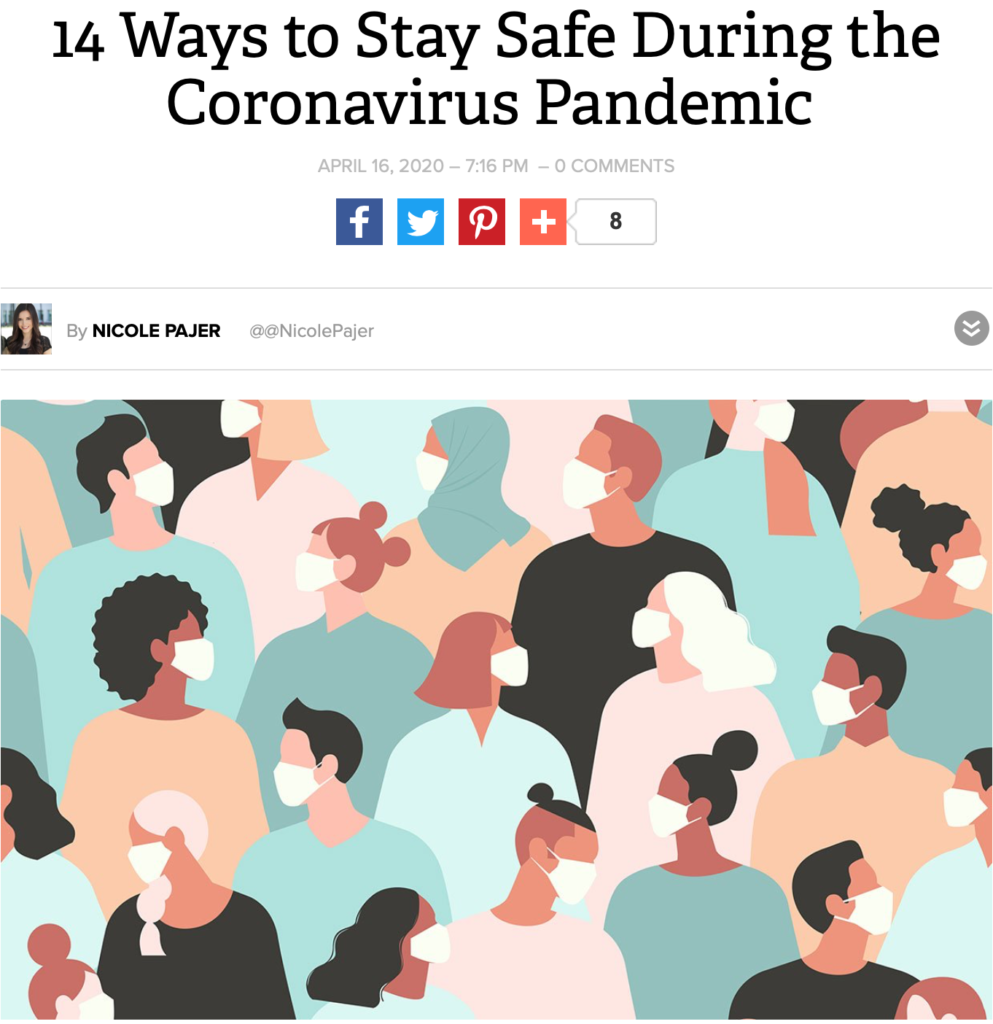
Parade.com wrote about ‘14 Ways to Stay Safe During the Coronavirus Pandemic’, which included everything from maintaining good support systems to consistent exercise to covering your face and how that can and can’t protect you. GIDEON co-founder Dr. Stephen Berger discussed important information to remember when it comes to wearing face masks.

Here’s what was covered in the article:

Realize that covering up your face is not an excuse to not social distance.

In early April, the CDC made the recommendation that Americans should wear masks and cloth face coverings whenever going out in public. But experts want you to know that this is not a reason to now get together with friends or to forgo the social distancing recommendations of keeping 6-feet away. While face masks can help to reduce the amount of viral respiratory droplets released into an environment, they are not 100% effective at keeping you safe from the coronavirus.

“Extremely small particles, including the virus itself, might pass through the spaces that allow air to pass,” Dr. Berger, told Parade. He added that facial coverings do not cover the eyes, which is another channel in which the virus can be transmitted.
“And face masks do not protect our hands, clothing, objects that we may be carrying. All of these are exposed to contaminated secretions and might infect us at some later time.”

You can read the entire article here. 

…But There Are No Cases in Turkmenistan

written by Dr. Stephen A. Berger

If you search the Internet for countries which have reported COVID-19, an endless variety of sources will describe the status of this disease in 207 countries and their dependencies. Few if any of these sites mention countries where this disease does not exist!

As of April 19, GIDEON lists twenty-four countries (10.4% of the global total) that had not yet encountered a single case. Ironically, at this point, these countries enjoy a form of “medical isolation” – thanks to the disease itself! The chance that a traveler – let alone an infected traveler – can arrive in a new country is vanishingly-small because the idea of international travel has been erased by COVID-19.

In most cases, countries that are not reporting COVID-19 cases have instituted travel restrictions, surveillance and preventive measures (masks, social distancing, etc). Several Pacific Island Nations listed below are geographically isolated, lack sufficient medical resources, and enforce similar forms of restriction and enforcement.

The approach of two European countries – Tajikistan and Turkmenistan – is notably different. Although Tajikistan enforces restricted travel and quarantine for arriving travelers, large public gatherings and sporting events are not restricted. Face masks, though not required, are commonly seen in the streets. In contrast, a report by Reporters Without Borders stated that Turkmenistan had banned the use of the word “coronavirus” and that people wearing masks could be arrested. Nonetheless, Turkmenistan does ascribe an absence of COVID-19 cases to strict enforcement of travel restrictions and announced in early April that all citizens will be tested for the virus.

A seeming absence of COVID-19 in North Korea has led to considerable speculation and even conspiracy theories. The fact that this country shares a border with China would suggest that infected individuals are likely to have entered the country; however, North Korea did impose closure of the border at an early stage of the Chinese outbreak, and imposes strict control, surveillance, and quarantine over potential cases.

Countries Which Have Not Reported COVID-19 (as of April 19)

  – Travel bans enforced including restrictions on incoming aircraft

  – Has physically refused entry to approaching cruise ships

    – State of Emergency declared

    – No additional information available

American Samoa

Christmas Island

Cook Islands

Kiribati

Lesotho

Marshall Islands

Micronesia

Nauru

Niue

Norfolk Island

North Korea

Palau

Pitcairn Island

Saint Helena

Samoa

Solomon Islands

Tajikistan

Tokelau

Tonga

Turkmenistan

Tuvalu  

Vanuatu

Wallis and Futuna Islands

Wake Island


Update: Posted in ProMED

Neglected Diseases – Neglected Once Again

written by Dr. Stephen A. Berger

For several years, the World Health Organization has been following a group of twenty-or-so Neglected Tropical Diseases. In the Developed World, these conditions are largely unknown to the general public, and even to physicians working in fields outside of Epidemiology and Infectious Diseases. In only three months, the list of neglected diseases has grown to include more than 360 infectious conditions – all because of a single new viral disease called COVID-19.

As of this morning, 287 cases of COVID-19 had been reported in the DRC (Democratic Republic of Congo) resulting in 23 deaths. How many are aware that this same country is in the midst of a massive outbreak of Ebola – which has claimed 3,457 cases and 2,266 deaths to date. Since January 1, nearby Nigeria has reported 188 deaths from Lassa fever, compared to only 13 deaths from COVID-19. 

Saudi Arabia is currently experiencing a massive outbreak of coronavirus infection, but not the one you’ve been reading about. For more than seven years, infection by MERS-CoV (a close “relative” of the COVID-19 virus) has infected 2,044 Saudis and claimed the lives of 821. Compare this to the current COVID-19 outbreak, which has killed “only” 83 Saudis as of today. Any patient who walks into a clinic in Rio, Paris or New York, and says that he has a cough and fever, will be rushed into an isolation room by a group of people draped in masks, gowns, goggles, and gloves. After all….what else could this be?! The answer to that question becomes apparent in the following list, generated by GIDEON.

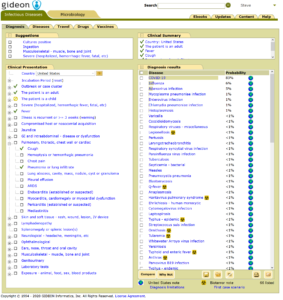
Note in this screenshot that I’ve asked the computer to list all possible diseases that could explain the presence of fever, cough, and pneumonia in a group of American adults. The GIDEON program tells me that COVID-19 is “number one” on the list, with a statistical likelihood of 83%. But no less than 65 other diseases also appear on this list, including, as you might expect, Influenza and a variety of common viral conditions.

The message here is simple: in the era of COVID-19, not every disease IS COVID-19.

Dr. Stephen Berger on why COVID-19 is different for men than women in Healthline article

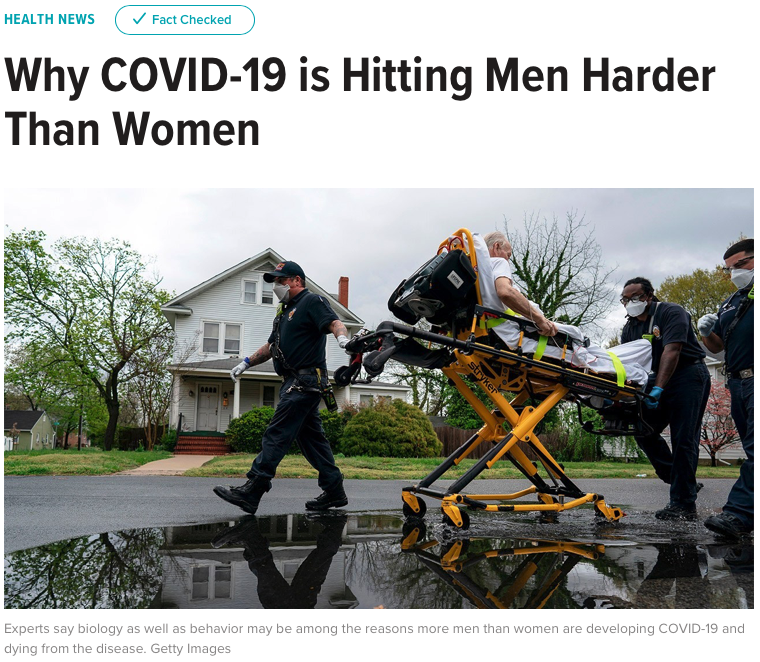
GIDEON founder, Dr. Stephen Berger was recently interviewed about gender disparities and COVID-19. Experts have been watching the data in Europe and have found that 68% of the COVID-19 deaths have been among men. And in New York City, men have been dying at twice the rate of women, according to the city’s health department.
Dr. Berger says genetics, preexisting conditions, and bad habits may be to blame.

“Some of the underlying reasons why COVID-19 may be more deadly for men than women may include the fact that heart disease is more common in elderly men than in elderly women,” Dr. Berger told Healthline. “Studies also find that high blood pressure and liver disease are more prevalent in men and these all contribute to more negative outcomes with COVID-19.”

Dr. Berger also explained that habits, like smoking, can negatively affect lung health, which may play a key role in COVID-19’s impact on men. He said that in China, for example, smoking is more popular among men, which could result in chronic lung disease. This puts them at a much greater disadvantage should they contract coronavirus. 

You can read the entire article here. 


Drugs for COVID-19: A Publishing Epidemic

written by Dr. Stephen A. Berger

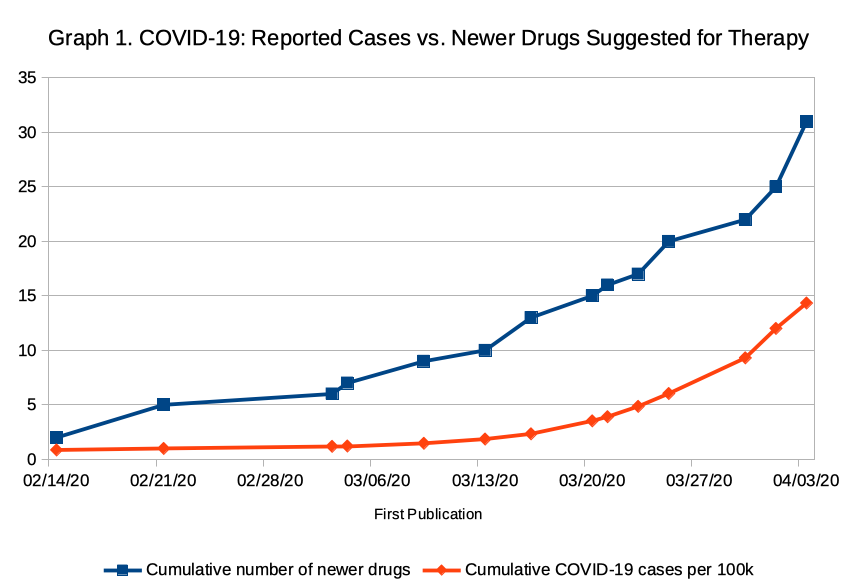
As of April 9, PubMed listed 2,868 scientific publications that incorporate the word “COVID”.   323 of these (11.3%) were related to drugs under study for the treatment of the disease. No fewer than thirty-one such drugs had been proposed since this pandemic first appeared on the planet four months earlier.   

Graph 1 depicts the cumulative numbers of COVID-19 infection (per 100,000 global population) and introductions of relevant drugs into the Literature from February 14 to April 3. Note that both increased by a factor of approximately 16-fold during this period.

Graph of reported COVID-19 cases vs suggested new drugs

In a biological sense, the “doubling time” for drug publication is similar to that of COVID-19 infection. Indeed, just as there is an incubation period between acquisition of the disease and the reporting of a given case, there is a delay period between submission of an article and its appearance in PubMed (one suspects that this process has been streamlined during the current emergency). There may even be an element of “contagion” at work in the publishing “explosion”.  

Many of the papers on COVID are repetitive, and an increasing number are reactive; ie, published in support – or in criticism – of other papers. The most notable example involves the use of Hydroxychloroquine. 

Inevitably, a wide variety of existing antiviral drugs have been proposed for the treatment of COVID-19. These agents are already used for the treatment of Influenza, Hepatitis C, HIV / AIDS, and other infections. Initial results suggest that many of these, which are commonly administered in clinical practice (Oseltamivir, Paramivir, Zanamivir, Ganciclovir, Acyclovir) lack activity against SARS-CoV-2, the agent of COVID-19.   Others that have been mentioned include Favipiravir,  Galidesivir, Interferon-alpha, Interferon-beta, Lepdipasvir, Lopinavir, Remdesivir, Ribavirin, Ritonavir,   Sofusbuvir, Telbivudine, Tenofovir, and Velpatasvir. Remdisivir and Lopinavir (used in the treatment of Ebola and HIV / AIDS, respectively) have attracted much interest in recent days. 

The treatment of COVID-19 has increasingly focused on drugs that either block viral attachment or modulate the vascular and immune responses which cause the actual “disease”. Anecdotal reports and small case series have suggested that Chloroquine and Hydroxychloroquine, drugs used in the treatment of malaria and certain inflammatory diseases, are effective in controlling these processes. Colchicine, Ivermectin, Metronidazole, Statin drugs, Sarilumab, Teicoplanin, and Tocilizumab may act through similar mechanisms. Not surprisingly, many publications have also examined the use of Traditional Chinese Medicines and serum obtained from patients who had recovered from COVID-19.

In some cases, these drugs have been advocated for both the prevention and the treatment of COVID-19. As such, the concept of “prevention” also extends to hospital personnel and individuals in the community who will no longer be at risk from the treated patient. Although the element of drug side effects is often mentioned in relevant publications, few point out that patients most likely to receive these agents (elderly people with underlying diseases) are likely to be receiving other drugs that could interact with the agent in question.  

The following is an alphabetical list of drugs that have been considered for the treatment of COVID-19, indicating the number of relevant publications indexed by PubMed to April 10, 2020. 

Drugs Proposed for the Treatment of COVID-19: Publications Indexed on PubMed

Drug or Other Agent Publications – number
Arbidol 5
Azithromycin 3
Baricitinib 6
Chloroquine 45
Convalescent serum 16
Colchicine 1
Emetine 2
Favipiravir 5
Galidesivir 1
Homoharringtonin 1
Hydroxychloroquine 35
Interferon alpha 4
Interferon beta 3
Ivermectin 1
Lepdipasvir 1
Lopinavir 31
Metronidazole 1
Nicotinamide 1
Remdesivir 20
Ribavirin 14
Ritonavir 29
Sarilumab 1
Sofusbuvir 2
Statins 4
Teicoplanin 1
Tenofovir 1
Tilorone 1
Tocilizumab 14
Traditional Chinese Medicine 46
Telbivudine 1
Velpatasvir 1
Vitamin B12 1

Don’t panic. Prepare

Dr.Tracey McNamara on West Nile Fever and COVID-19


As interviewed by Edward Borton, GIDEON

What was the experience of discovering a new virus outbreak on your doorstep?

When New York City announced that people were dying of unusual encephalitis, I was struck by the timing and proximity between this event and an outbreak of crow deaths. Upon ruling out all known viruses that cause inflammation of the brain in birds, in the United States: exotic Newcastle, avian influenza, and Eastern Equine encephalitis (EEE), I knew this was something new.

It wasn’t until I picked up the phone and called the U.S. Army and said “I think it’s something new to veterinary medicine. I think it’s the same thing killing people in New York City, but no one will test my samples.” That one phone call changed everything because the military had a different mindset. When you say ‘something unusual, new and killing people’, they immediately thought of bioterrorism, and the West Nile virus is indeed a biowarfare weapon.


Was there a significant media response at the time? How does the response compare with what we’re experiencing today?

It was pretty crazy. We faced the same situation: a disease that we had never seen in the Western Hemisphere, and knew nothing about. We didn’t know what it was going to do, who it was going to make sick, only that it had already killed people. The scientists had nothing but questions about this virus and the public was extremely anxious.

To minimize panic, everyone was told ‘it’s only affecting the very young and the very old’.  Public health officials were telling people to wear mosquito repellent and destroy mosquito habitats if found in or near your home. Sadly, a lot of people were saying, ‘I don’t have to worry about this’.

It seems to be an instinctive response to a novel threat, to just deny it,  but sticking your head in the sand doesn’t mean something isn’t going to walk up and bite you on the butt.


Do you feel that the technology available to the industry is sufficient right now or does it need to improve before we start moving things forward?

I think the technology is there. There are companies using artificial intelligence and algorithms to detect anomalous events. It just hasn’t been applied to the animal sector.

We need to improve the speed of diagnostics. When the Ebola virus outbreaks took place, that prompted scientists to look into portable deep sequencing in the field. There is a company that developed a tool that’s smaller than a lunchbox, which allows you to take a swab, stick it in the device and in two hours you can download the results to your laptop. In two hours, you could know what you’re dealing with, whether it’s Ebola, or another virus, bacteria, fungus, parasite or unicellular organisms.

Another really powerful thing is a species neutral diagnostic test. It doesn’t matter if it’s human, environmental or animal. We’re probably talking 10 years from now, but it has been deployed in the field for Ebola, so we will eventually replace all our other methods of diagnostic tests we’re currently using.


Do you think we’ll see a new wave of people inspired to get involved in healthcare as a result of the current outbreak? 

Yes, I think so. Young people, they’re so interconnected, they’re online constantly. They will make terrific advances.

There is a phrase used when teaching medical students – ‘when you hear hoofbeats in the distance, think horses, not zebras.’ None of us can afford to think that way anymore, we all have to be thinking about zebras.

We, as human beings, have to find a way to bring all of our expertise together and to respond quickly. That will prevent major mortalities, no matter what profession you’re in. We all have a different mindset but that is what we need – multi-disciplinary teams.

We truly are all in this together and everyone has a role to play. I hope everyone keeps that in mind. Don’t panic. Prepare. Don’t get scared. Prepare. Work with the officials that are working around the clock trying to get their arms around us.

 

Dr. Tracey McNamara was hugely influential in the discovery of the West Nile Virus outbreak in the United States in 1999 and has been in the field of veterinary pathology for over 32 years, including Professor of Pathology at Western University of Health Sciences for almost 13 years.

Tracey gave a TedX talk at UCLA on ‘How monitoring animal health can predict human disease outbreaks’, which is available here.
 

GIDEON Sign In