GIDEON blog

Free Demo ► Latest Updates ► Video Tutorials ►
Subscribe , j x

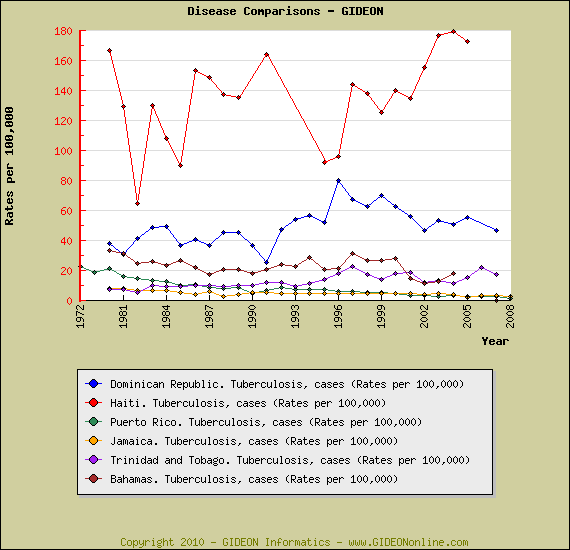
Tuberculosis in Haiti

As pointed out by ProMED, tuberculosis rates in Haiti were already highest in the region before the current disaster. In the following graph, I’ve contrasted reports for Haiti with those of neighboring countries.

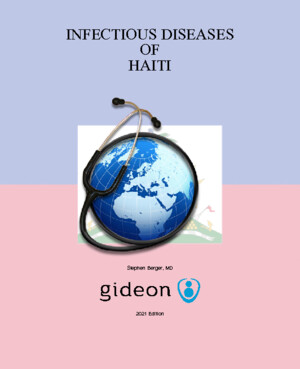
Don’t forget to check out GIDEON’s free e-book: Infectious Diseases of Haiti

E-book: Infectious Diseases of Haiti by GIDEON

When the humanitarian disaster in Haiti began to unfold, we accelerated development of a comprehensive book on the diseases of that country. This will be one in a series of ebooks which present the status of all infectious diseases…in all individual countries. This ebook, Infectious Diseases of Haiti, will be offered free of charge to all health professionals concerned with the current disaster.

There are 347 forms of human infectious disease in the world today – and 198 of these (more than half) are known to occur in Haiti. Sadly, one of the “side effects” of living in a poor and disaster-ridden economy is a lack of useful facts regarding the local status of individual diseases. GIDEON (Global Infectious Diseases and Epidemiology Online Network) is a Web-based application which follows diseases – both on a global level and within each country. Data are updated daily and are derived from all relevant journals, websites, Health Ministry reports and publications of the World Health Organization. The electronic book (ebook) is generated from information in the GIDEON database, and will serve as the first comprehensive review of infectious diseases in Haiti. Similar ebooks are now available by country and disease.

Download the 2017 edition for free in PDF, EPUB and MOBI: Infectious Diseases of Haiti by GIDEON

2010 legacy editions

Non-tuberculous Mycobacterial Infections

Infection by non-tuberculous mycobacteria is commonly associated with cosmetic surgery, therapeutic injections and other invasive procedures. The following is a list of notable outbreaks:

Argentina:
2007 to 2007 – An outbreak (28 cases) of Mycobacterium immunogenum infection in Buenos Aires was associated with mesotherapy.

Brazil:
2002 to 2004 – An outbreak (14 cases) of mycobacterial wound infection associated with silicone breast implant surgery was reported in Campinas, Sao Paulo.
2003 – An outbreak (5 cases) in Sao Paulo of keratitis due to Mycobacterium immunogenum was associated with myopia surgery.
2004 to 2005 – An outbreak (311 cases) of Mycobacterium abscessus infections in Belem was associated with invasive procedures. Mycobacterium massiliense and M. bolletii were also identified in some cases.
2006 to 2007 – An outbreak (1,051 clinical cases) of Mycobacterium massiliense infections involving 63 hospitals in Rio de Janeiro state was related to contaminated instruments used in video-assisted surgery.
2008 – An outbreak (13 cases) of Mycobacterium fortuitum infections in Sao Paulo was associated with breast implant surgery.
Read the rest of this entry »

GIDEON review in Travel Medicine and Infectious Disease

Dr. Stephen Toovey wrote a nice review of GIDEON in the Travel Medicine and Infectious Disease journal. He says “…there is no doubt that travel medicine practitioners, infectious disease physicians and microbiologists in need of a serious database will have to consider Gideon”

Traveling to Haiti

Even before the earthquake, travelers to Haiti were advised to consult with an expert in Travel Medicine.  The new situation has significantly increased the risk for a variety of infectious diseases – both common and “exotic.”   Needless to say, there are many health risks which are not related to infection – excessive heat and sun exposure, political violence, psychological trauma, etc.

Clearly, the most common problems will be related to contamination of food and water: dysentery, salmonellosis and other forms of gastroenteritis.  Cholera is not currently encountered in Haiti.  There is no vaccine for these diseases, and preventative measures (if possible) will include adequate heating of food, bottled water, etc.  Many experts would also suggest that the traveler carry antibiotics (Azithromycin or Ciprofloxacin) to be taken in the event of symptoms.

Among the food / water-borne diseases, Hepatitis A (and possibly Hepatitis E) and typhoid constitute a genuine risk.  All travelers should be vaccinated as far in advance as possible before embarking for Haiti.  Several food borne parasitic infections are also common in Haiti.

The rate of AIDS in Haiti is particularly high.  Although most HIV infection in Haiti has been acquired through sex, exposure to blood will now become a major risk factor.

Malaria is endemic to 75% of Haiti.  Although the local parasite strain is often associated with severe illness, and even death, it is sensitive to anti-malarial drugs.   People traveling to Haiti should take two tablets of Choroquine, once weekly.  Another common mosquito-borne disease, dengue, can only be prevented by vigorous use of insect repellents.  Such measures might also prevent a number of local exotic parasitic diseases (Wuchereriasis, Mansonelliasis).

Animal contact should also be avoided – rabies, anthrax and other “zoonoses” are not uncommon in this country.

Contrary to common belief, contact with dead bodies is not considered a health risk.  A person who did not have cholera or typhoid in life will not begin to spread these diseases because she has died.

Anyone returning from Haiti should arrange for a stool examination – even if they feel well. Parasitic infestation is not necessarily associated with symptoms.  Needless to say, if fever, diarrhea, headache or any other symptom of infection develops, a physician should be consulted.

Also check out GIDEON’s free ebook: Infectious Diseases of Haiti
Pogosta Disease

Time and Place:
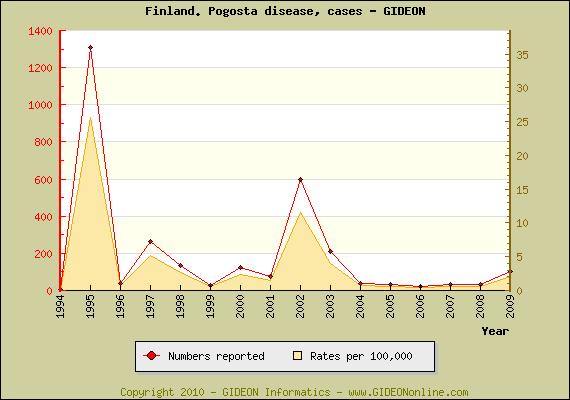
– Pogosta disease was first described in the Pogosta region of Northern Karelia in 1974.
– The disease is reported from all parts of Finland, however, North Karelia remains the region with highest incidence, with rates as high as 80 per 100,000.
– Extensive epidemics were recorded in 1974, 1981 (thousands of cases), 1988 and 1995.
– Incidence peaks during August to September.
– Disease incidence follows a seven-year cycle.
– Highest rates are reported in the age group 45 to 65.

Graph Notes:
1. 2,183 laboratory-confirmed cases were reported during 1981 to 1996 (average rate 2.7 per 100,000 per year).
Individual years:
1995 – Cases were distributed throughout the country, with highest incidence in central Finland, Savo and North Karelia.
2003 – Included 105 cases in Lansi-Suomi and 50 in Ita-Suomi.

Seroprevalence surveys:
1.7% of ‘suspected rubella’ in Finland (1973 to 1989)
11% of persons suspected of having viral infection – 17% in western Finland, 9% in northern and southern Finland
0.6% of women of childbearing age (1992)
5.2% of humans (Sindbis virus, 1999 to 2003)
27.4% of resident grouse (Tetrao urgallus, T. tetrix, Bonasa bonasia, Lagopus lagopus) in 2003, 1.4% in 2004

The principal vectors are mosquitoes (Culex and Culiseta species), and the presumed reservoirs are tetranoid and migratory birds.
– During an epidemic in 1981, 65% of black grouse and capercaillie were found to be seropositive.

Leptospirosis in Ireland

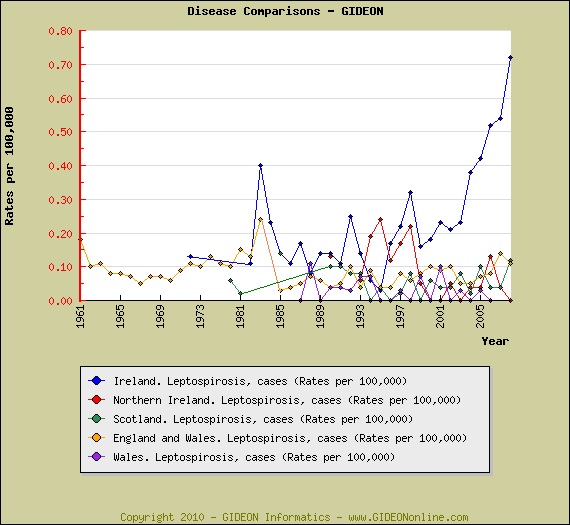
A recent death in Ireland highlights the fact that the incidence of leptospirosis in this country has been increasing in recent years. In fact, during the past decade, leptospirosis rates have expanded well beyond those of those of the United Kingdom, including those for adjoining Northern Ireland. See graph:

Update: Published in ProMED

New GIDEON Diagnosis Module Video

Following up on the post announcing the new GIDEON diagnosis module, there is now a video demonstration by Dr. Steve Berger:

https://www.youtube.com/watch?v=nxLJ1Yo0xDE

Wishing you all a happy 2010!

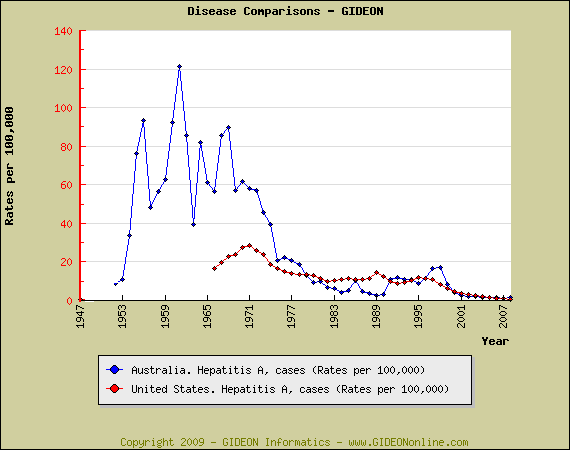
Hepatitis A in Australia

The incidence of Hepatitis A in Australia has decreased dramatically in recent decades – from a high of 12,876 cases in 1962, to only 274 cases in 2008.

Since the 1970’s, rates of Hepatitis A in Australia have been strikingly similar to those of the United States (see graph):

hepatitis-Australia

Graph notes:
1.3. During 1991 to 1997, highest rates (52 per 100,000) were reported in the Northern Territory.
2. During 1991 to 2006, rates in New South Wales declined from 18.9 per 100,000 to 1.4 per 100,000.
Individual years:
1991 – 46.7% from New South Wales.
1994 – 39.7% from Northern Territory and 25.1% from Queensland.
1996 – 45.6% from New South Wales.
1997 – 47.3% from New South Wales.
1998 – 44.9% from Queensland and 37.8% from New South Wales.
2005 – 15.4% from Queensland and 25.5% from New South Wales.
2009 – Increasing rates in Victoria and South Australia appear to have been associated with ingestion of contaminated semi-dried tomatoes.

No fatal cases were reported during 1991 to 1997; 8 during 1998 to 2000.

570 cases were reported from eastern Sydney during 1991 to 1992, of which 58% were men who have sex with men.
– 236 cases were reported from south-eastern Sydney during June 1997 to May 1998 – over 60% of male cases acquired through homosexual contact; 118 during June 1998 to May 1999 – 29% through homosexual contact.

Seroprevalence surveys:
41.1% of Australians, 68.8% in the Northern Territory (1998)
75% of HIV-posititive MSM (2007 publication)
48% of homeless persons in Sydney (2003 to 2005)
3.0% of STD clinic patients (Canberra, 2000 to 2002)
37% of prisoners in New South Wales (1994)

Since 1993, hepatitis A has been the most common cause of infectious disease death among indigenous children in northern Queensland.
– Clinically apparent and severe hepatitis A are more common among indigenous children than their non-indigenous counterparts
– A vaccination program for this population was introduced in 1999.
– During 2003 to 2006, disease rates were 8.1 per 100,000 among indigenous people vs. 1.7 per 100,000 in other populations.

Notable outbreaks:
1970 (publication year) – An outbreak of Infectious hepatitis was reported in an institution.
1980 (publication year) – An outbreak (15 cases) was reported in a home for mentally-retarded children in Sydney. {p 6929674}
1991 – An outbreak (495 cases) in Melbourne involved men who have sex with men.
1993 – An outbreak (11 cases) was reported at a center for young people with developmental disabilities.
1996 (publication year) – An outbreak (7 cases) at a hospital in North Queensland may have been related to handling of contaminated bile.
1997 – An outbreak (7 cases) occurred among boys using a domestic spa in Melbourne.
1997 – An outbreak (270 cases or more) in New South Wales was traced to raw oysters.
1998 – An outbreak (45 cases) in Sydney was ascribed to illicit drug use.
2003 – An outbreak (10 cases) in Tasmania, Victoria and Queensland occurred among people who had been on tour in the Northern Territory.
2003 – An outbreak (21 cases) at a youth camp in central Australia was associated with ingestion of contaminated coleslaw.
2008 – An outbreak (15 cases) was associated with a cafe in Melbourne, Victoria.
2009 – An outbreak (200 cases) in Victoria was associated with consumption of semi-dried tomatoes.

New GIDEON Diagnosis module

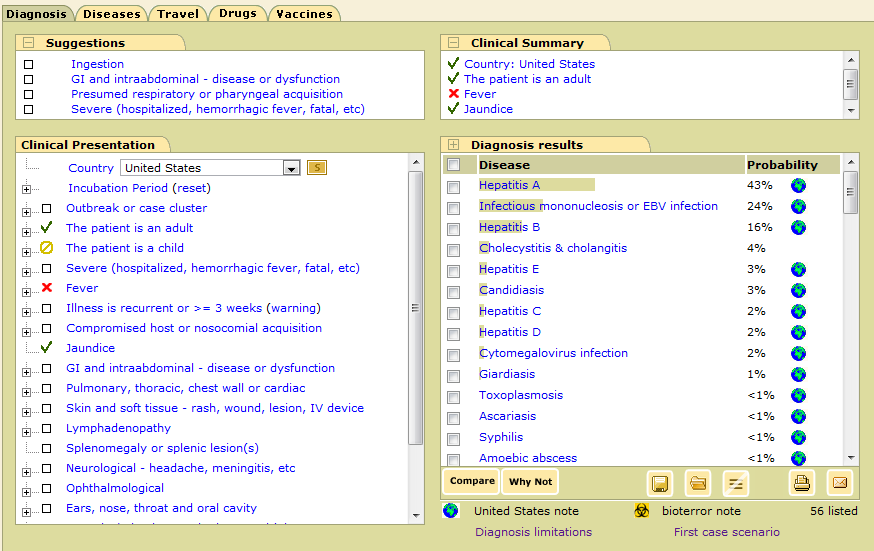
GIDEON’s redesigned Infectious Diseases Diagnosis module has been launched (screenshot). There are many new features, including

  • Suggestions
  • Dynamic diagnosis
  • Usability improvements

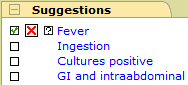
Suggestions

Diagnosis suggestions snapshotUntil now, GIDEON’s Diagnosis Compare function has ranked signs and symptoms which are most likely to impact the Differential Diagnosis list. Now, the top four clinical findings which are most likely to focus and shorten the list of possible diseases are displayed and dynamically updated as each new sign or symptom is entered. Clickable boxes which allow the user to enter a “yes”, “no” or “unknown”, appear and enlarge each time the mouse passes near a perspective finding.

Dynamic diagnosis

The Diagnose button has been eliminated! Now, the differential diagnosis list updates automatically as you enter signs and symptoms. This feature demonstrates the effects of each new sign or symptom as it is entered.
The First case scenario list still appears below the diagnosis list.
Diagnosis results buttonsThe familiar buttons: Compare, Why Not, Open case, Save case, Remove All, Print, Email are all in the Diagnosis Results area.
Usability improvements

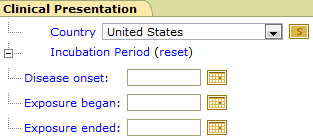
Country selection and Incubation period entryCountry and incubation period in symptom list
Country name and Incubation period have been appended to the Clinical Presentation list.  Now, whenever you indicate a country name, or dates of exposure, the Differential diagnosis list instantly re-adjusts accordingly.

Collapsible windows
Windows, such as Suggestions and Clinical Summary can be minimized and hidden. For example to not see suggestions, click on the minimize button Minimize button to the left title.

Mouse overs
Mouse over check boxMore mouse-overs have been added: Clickable boxes expand as you mouse over them, and display clear symbols to select “yes” or “no.”

Clinical Summary
You can now click on the signs and symptoms in the Clinical Summary. Clicking on Country will display “Worldwide”. Clicking again displays the country.

Quick sorting
Probability sort arrowDiagnosis results can be sorted alphabetically or by probability easily by clicking the column title.
Resize window
Changing vertical window size expands size of Clinical presentation and Diagnosis results sub-windows. This is a great feature for larger monitors.

Previous version
Click “Original diagnosis” to use the older interface.

GIDEON Sign In