GIDEON blog

Free Demo ► Latest Updates ► Video Tutorials ►
Subscribe , j x

Travel and measles

A sample of the new enhanced content for the Travel tab, was provided on ProMED related to an outbreak of Measles in New Mexico:

Travel and measles
——————
1982 – An outbreak (7 cases) among patients in a pediatrician’s office in the United States was related to an imported case from Korea.
1998 – An outbreak (69 cases, 2 hospitalized, 0 fatal) in Tuvalu was ascribed to introduced cases among workers from Nauru.
1998 – An outbreak (33 cases) was linked to an infected visitor arriving in Alaska, United States, from Japan.
1999 – An outbreak (75 confirmed cases) in Australia was traced to an index case from Indonesia.
2000 – Outbreaks (78 cases, total) in Canada were linked to travel in Mexico (6 cases), Bolivia (19 cases), and Belgium (25 cases).
2000 – An outbreak (992 cases, or 57 percent of all cases for the Americas region) in Haiti was thought to have originated with imported cases from the Dominican Republic.
2000 to 2001 – An outbreak (1062 cases, 0 fatal) was reported in Tanzania among refugees from Burundi.
2001 – An outbreak (37 cases) in Venezuela was ascribed to a case imported from Europe.
2001 – An outbreak (14 cases) in the United States was reported among internationally adopted children.
2002 – An outbreak (1334 suspect cases; 128 confirmed) in Colombia was traced to index patients who had acquired the disease in Venezuela.
2002 – An outbreak (13 cases) in the United States resulted from a case imported from the Philippines.
2002 – An outbreak (6380 suspect cases; 2397 confirmed) in Venezuela was traced to measles imported from Europe.
2003 – An outbreak (107 cases) in an unvaccinated religious community in Israel followed introduction of an index patient from Switzerland.
2003 – An outbreak (22 cases) was reported in Mexico following importation of measles from either Japan or Korea.
2004 – An outbreak (59 cases) was reported in Mexico following importation of an index case from Asia.
2004 – 10 confirmed cases were identified among Chinese children (from Hunan) arriving in the United States, and 3 Chinese children arriving to Norway.
2005 – An outbreak (34 cases) in the United States was related to an index case who contracted measles in Romania.
2005 to 2006 – An outbreak (27 cases) in Mexico was related to index cases who had worked at an international airport.
2006 – An outbreak (7 cases) in Australia was related to an imported index case.
2006 – An outbreak (15 cases) in an office building in the United States was associated with an index case, which had arrived from India.
2006 – An outbreak (3 cases) was reported among members of an adoption group returning to the United States from China.
2006 – An outbreak (44 cases) in Venezuela was ascribed to an index case arriving from Spain.
2006 to 2007 – An outbreak (213 cases) in Spain followed importation of a case from Eastern Europe.

Salmonellosis in Germany

ProMED published another note from GIDEON related to Salmonellosis in Germany. Here’s an abstract:

Salmonellosis accounts for 14 percent of all reported infectious disease and 98 percent of all zoonoses in Germany. 55 percent of infections are acquired from meat and poultry.

Recent incidence data are displayed at Salmonellosis rates in Germany and are contrasted with those of the United States at Salmonellosis rates in Germany compared to United States

Pre-travel feature enhances GIDEON for Travel Medicine

Infectious Diseases – Travel


Traditionally GIDEON has been used by Travel Medicine practitioners, who have loved the detailed country information for the various diseases affecting travelers. Their main suggestion was to add more pre-travel information that could be provided to travelers at consultations. We’re happy to announce that we listened and have now launched a new Travel tab in the Infectious Diseases module.

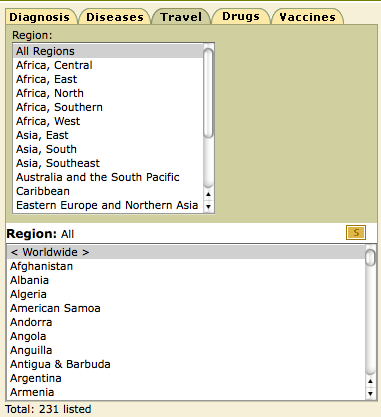
The left side of the Travel section includes the general Region of travel in the upper box, and specific countries in the lower box:

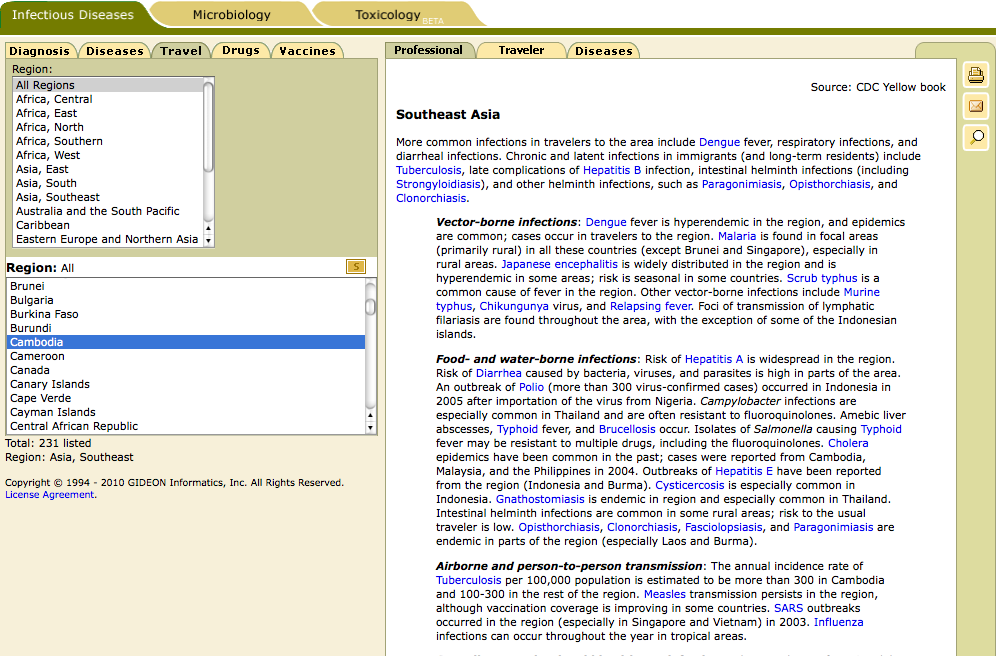
Selecting a specific country lists relevant information in the right-hand column of the Travel section.   The general pre-travel information is provided by region and is divided into Professional, Traveler, and Diseases sections:

The Professional tab is for health practitioners and is based on content from the CDC Yellow book. Links are provided directly to relevant disease information in GIDEON:

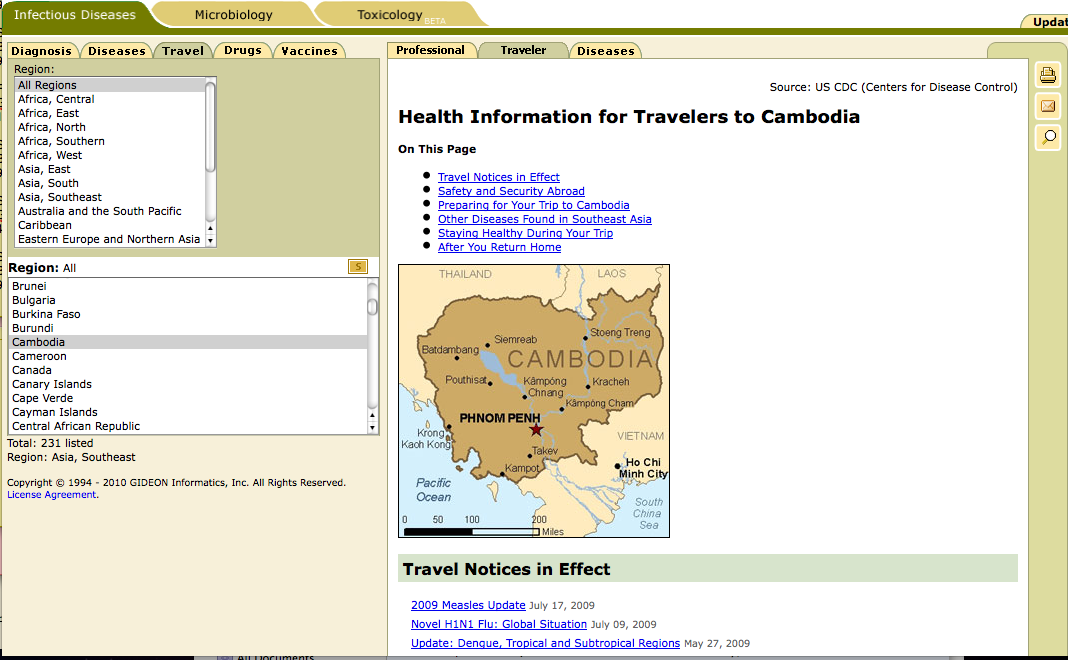
The Traveler tab is traveler friendly content from the CDC Traveler’s health destination guide. Links are provided to additional information from the CDC:

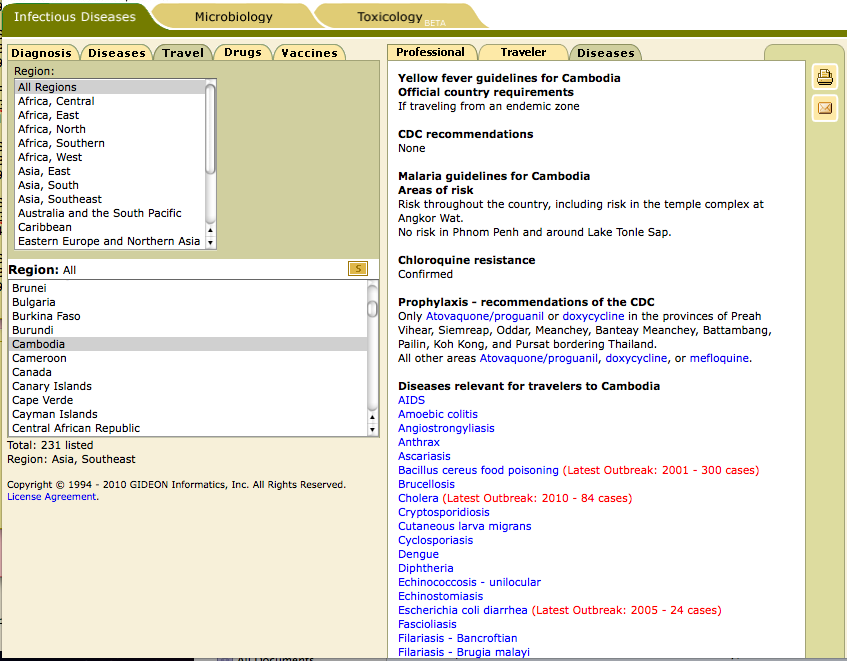
The Diseases tab displays the list of all the relevant diseases that have additional information for travelers to the selected country. The content is presented briefly as a “mouse over” and can be accessed more thoroughly by linking to actual country note for the specific disease:
As with all the information in GIDEON, you can print and email each section information. This will be very useful to serve your travelers that want a hard copy of the information or a soft copy via email.

“Traveling with GIDEON” is a new case of the month that demonstrates how to use the Travel tab and includes a video.

Easier diagnosis with symptom images

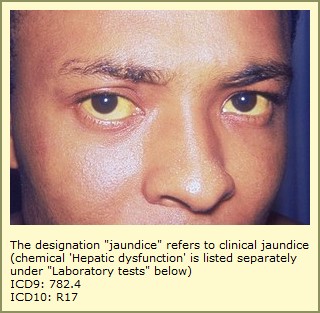
Diagnosing a patient has just become easier with our latest feature, symptom images. As you mouse over any of the symptoms in the Diagnosis module, the signs and symptom description will display a representative photo or image. This will provide an additional visual differentiation of similar symptoms, further enhancing GIDEON diagnosis. See the example of the description of Jaundice to the left.
Eastern Equine Encephalitis (EEE) in the US

Another Promed post by Steve:

The relative importance of Eastern Equine Encephalitis [EEE] in the United States has been overshadowed by the emergence of neuroinvasive West Nile fever (WNF) virus infection. The graphs referenced below illustrate the relative incidence of older forms of arboviral encephalitis: Graph of encephalitis cases in the US
and the dominance of WNF since 2003: Graph of encephalitis cases versus West Nile fever in the US.

ICD9 and ICD10 codes added

As a result of feedback from our users, we’ve added ICD9 and ICD10 codes to Diagnosis symptoms and the Epidemiology diseases.

In the Diagnosis module, the mouse-over description for symptoms will display the code, if available. For example, the description for “Jaundice”:
Jaundice symptom description, with ICD9 and ICD10 codes

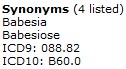
The General tab of diseases in Epidemiology will display the ICD9 and ICD10 codes below the list of disease synonyms. Synonyms and codes for Babesiosis:
Babesiosis synonyms and ICD9 and ICD10 codes

The codes have been integrated both into diagnosis and text search. So if you want to diagnose an infectious disease based on the ICD9 and/or ICD10 codes for symptoms, just enter them in diagnosis search and click the button.

Likewise if you’re searching for a disease based on the ICD9 or ICD10 code, enter the code in text search and click.

Cryptosporidiosis in Ireland

Cryptosporidiosis rates in Ireland + surroundingsAnother post in ProMED from Steve describing Cryptosporidiosis in Ireland with a graph comparing rates in neighboring regions:

Background data:
Rates of Cryptosporiosis in Ireland and adjacent countries have been similar since the 1980’s.

Cryptosporidiosis became a notifiable disease in Ireland in January 2004, with 61 percent of cases having been reported during April to June [?2004]. A total of 5 outbreaks (25 outbreak cases) was reported in 2004. A total of 6 outbreaks (49 outbreak cases) was reported in 2005.

Prevalence surveys:
4 percent of gastroenteritis among children.
4 percent of diarrhea requiring hospitalization among Dublin Children 1987.
149 cases were reported among children below age 2 years in 2002; 106 in 2003.
64 patients were hospitalized for cryptosporidiosis in 1999; 57 in 2000; 65 in
2001; 53 in 2002. 70 cases (18 per 100 000) were reported by the South-Eastern Health Board in 2001. 66 cases (19 per 100 000) were reported by the Western Health Board in 2001.

Infected local shellfish species:
_Mytilus edulis_ (Common mussel) in the Sligo Area
_Dreissena polymorpha_ (Zebra mussel) in the Shannon River drainage area.

Notable outbreaks:
2002 – Outbreaks (3 outbreaks, 65 cases) were reported, including a water-borne outbreak more than 32 cases) in the Midland region.
2005 – An outbreak (31 cases) in the western region was associated with contaminated water.
2007 – An outbreak (125 cases) was reported in Galway.

Northern Ireland:
Notable outbreaks:
2000 – An outbreak (121 confirmed cases) was reported – with most cases in the County Antrim and County Down towns of Lisburn and Bangor.
2001 – An outbreak (230 confirmed cases) was reported in Belfast – source unknown.
2001 – An outbreak (57 cases) was reported in Ulster – source unknown.
2001 – An outbreak (110 cases) was reported in Eastern Health Board – ascribed to contamination of water from the Dunmore treatment facility.
2003 – An outbreak (391 cases) was reported among British tourists at a hotel in Majorca – 179 from England and Wales, 170 from Scotland and 42 from Northern Ireland.
2004 – An outbreak (14 cases) was reported in the Midland Health Board – ascribed to a contaminated water supply.

Microbiology Text search

One more feature enabled by the microbiology module makeover is support for text search. Search results for organisms will show up in regular text search. Now you can search for all GIDEON main keywords from the text search box, unifying all the information.
We have some more work: index all the text and images and maximize the value of search in GIDEON.

Measles in Italy

Regarding the recent outbreak in Apulia, gradual decreases in measles rates may reflect the fact that vaccine coverage for Italy has exceded 80% only since 2002. Click on graph: Graph of Measles in Italy
Outbreaks of measles in Italy:
1996 to 1997 – An outbreak (1,642 cases seen at one hospital) was reported in Palermo.
2002 – An outbreak (24,000 clinical cases; 368 hospitalized; 13 encephalitis; 3 fatal) was reported in Campania. The rate among children below age 15 years was 3,750 per 100,000.
2003 – An outbreak (1,217 cases) was reported in Calabria and Puglia.
2003 – An outbreak (26 cases) was reported in South Tyrol.
2006 – An outbreak (40 cases) was reported in Grosseto.
2006 – Outbreaks (187 cases in 3 outbreaks) were reported in the Roma / Sinti populations of South Tyrol (17 cases), Sardinia (9 cases) and Lazio (161 cases).

GIDEON blog launches

We have replaced our news page with this blog. This enables us to more easily communicate news about GIDEON while providing tools for you to monitor the news. The tools, including RSS feeds, archives and categories have proven to be very useful in the blogosphere. Feel free to provide feedback on this transition and any other items.

Please note that we have back-populated some posts to include information from the old news page and will continue the process for some of the items in our news archive and reviews pages.

GIDEON Sign In